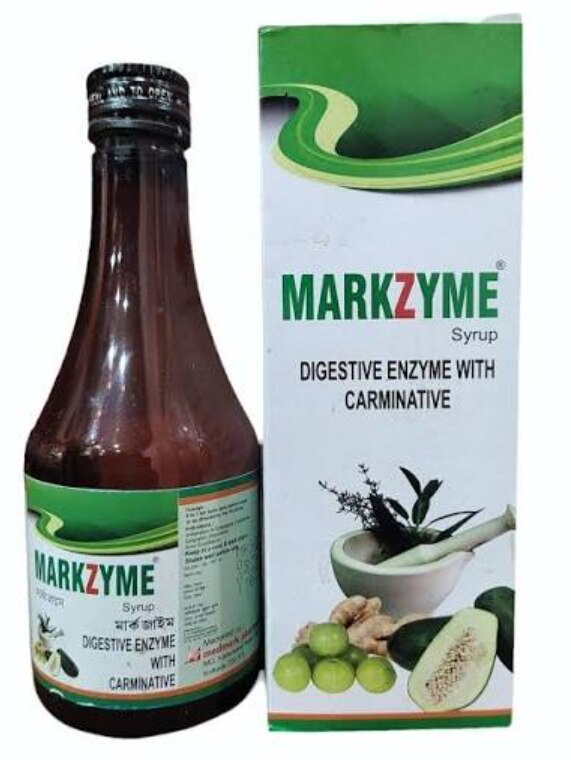
Choosing a Markzyme partner requires more than a product catalogue or a low per-bottle quote. You will be able to verify the Panchkula site, licence, enzyme-handling controls, testing records, stability evidence and commercial terms before appointing a manufacturer.
Key takeaways
- Match the manufacturing address with the label, licence and ONDLS records.
- Request the plant’s Form 20B licence copy and legal manufacturing agreement.
- Check enzyme storage, processing temperatures and activity testing before appointment.
- Compare stability data, packaging compatibility, release tests and total contract cost.
Verify the Markzyme manufacturer’s Panchkula site, licence and legal arrangement
Confirm the complete Panchkula manufacturing address against the Markzyme label, the Haryana drug-control authority’s licence and ONDLS records where available. A marketing office, registered office, warehouse or distributor address does not prove that manufacturing occurs at that site. Visit the premises or request verifiable site evidence before appointing a Markzyme syrup manufacturer.
Check that the licence covers the actual dosage form and product category. The word “syrup” does not decide whether Markzyme falls under ordinary drug provisions, Schedule C or C(1), or Schedule X requirements. Ask for:
- The licence holder’s legal name and complete approved premises address
- The approved composition, product approval or licence details, and permitted claims
- The arrangement type: third-party manufacturing, loan-licence production or purchase of finished stock
- The batch-release authority, quality-unit responsibility and record owner
- Written responsibility for complaints, recalls, deviations and retained records
A purchase order alone cannot define a loan-licence or third-party arrangement. Put these responsibilities into the manufacturing agreement, including the premises authorised for production. If Markzyme is classified as a food or health supplement, verify the applicable FSSAI licence, formulation permissions and permitted claims; a pharmaceutical licence cannot replace FSSAI authorisation.
Do not accept disease-cure or treatment claims without confirming the product’s legal category and approval route.
Compare syrup manufacturing companies on capability, quality systems and total cost
A suitable Markzyme supplier proves that its line, quality unit and quotation fit your batch—not merely that it makes liquids. Compare a syrup manufacturing company using records and defined limits.
| Evidence | Suitable partner | Warning sign |
|---|---|---|
| Production | 200 ml filling; minimum and maximum batch size, tank capacity, campaign schedule, bulk-hold limit, filling-speed controls, sampling locations and repeat-order capacity | “Flexible capacity” without figures |
| Quality | Current GMP evidence aligned with revised Schedule M, qualified water and utilities, equipment qualification, sanitation records, process validation, deviation and change-control procedures, OOS examples, retained samples and independent QC release | ISO 9001 alone |
| Commercial | One price covering testing, ingredients, packaging, studies and documents | Bottle price with exclusions |
Ask for the quote to identify Fungal Diastase and Pepsin testing, syrup base, preservatives, flavour, colour, bottles, caps, induction seals, labels, cartons, stability studies, artwork approval and regulatory documents. Also compare minimum order quantity, technical-transfer fees, lead time, rejected-batch liability, approved-artwork change charges and stability-study ownership.
A Markzyme supplier offering the lowest bottle price may omit controls that make quotations comparable. For Markzyme syrup for pharmaceutical manufacturing in Panchkula, require written confirmation of the qualified water system, validated mixing and filling, bulk-hold limit, sampling plan and quality-unit release before treating the price as final.
Ask how the plant protects enzyme activity during syrup preparation and filling
Approve the batch only after the Markzyme syrup manufacturer shows how each process step protects Fungal Diastase and Pepsin activity. Request the master manufacturing formula and completed batch record, not only a finished-product certificate of analysis.
| Stage | Evidence to review | Written limit to verify |
|---|---|---|
| Raw materials and water | Dispensing entries, water grade, water-system monitoring | Identity, microbial limits and approved water controls |
| Syrup preparation | Aqueous base, mixing order and preservative-dissolution records | Temperature, agitation and dissolution time |
| Enzyme addition | Recorded point for Fungal Diastase and Pepsin entry | Probe location, approved temperature range and mixing speed |
| Bulk hold and transfer | Hold-time log, recirculation or transfer settings | Maximum exposure time before filling |
| Finishing and filling | Flavour, colour, filtration or homogenisation records; 200 ml fill checks | Homogeneity, fill-volume limits and deviation triggers |
| Packaging and release | Capping, labelling, reconciliation and laboratory results | Closure checks and quality-unit release approval |
Reject “added at low temperature” as a control. Ask for the actual range, probe location, agitation speed or recirculation setting, permissible hold time and the condition that opens a deviation.
For this viscous liquid, request validation evidence from multiple tank locations and fill-volume consistency across the run. Confirm that the quality unit reviews in-process results, deviations, OOS investigations, laboratory worksheets, reconciliation and retained-sample records before release. A pharmaceutical manufacturing in Panchkula should document every step from dispensing through batch release.
Review enzyme raw-material files, packaging compatibility and release tests
A finished-product COA does not prove that a Markzyme batch was properly released. Trace every result from receipt to quality-unit authorisation.
1. Ask the Markzyme supplier for qualification records for each Fungal Diastase and Pepsin vendor, plus every lot’s COA, identity-test result, potency or enzyme-activity result, microbial limits and stated storage conditions.
2. Review the syrup base, preservative system, flavour and colour for compatibility with enzyme activity and the proposed shelf life. A syrup manufacturing company should document the justification, not merely state that the formula is compatible.
3. For the bottle and closure, verify the material specification, cap-and-seal design, fill-volume tolerance, leakage protection, induction seal or other tamper evidence, compatibility assessment, relevant extractables or leachables work and transport testing. Poor compatibility can cause adsorption, preservative loss, migration or leakage.
4. Before release, require documented results for appearance, odour, pH, fill volume, viscosity, microbial limits, validated assay or enzyme activity, preservative content where applicable and container-closure integrity. Trace these results through the batch manufacturing record, in-process checks, laboratory worksheets, deviations, OOS investigations, reconciliation and retained samples.
5. Confirm that the independent quality unit—not sales or production—authorised release and reviewed the complete file. A finished-product COA alone is insufficient evidence that the Markzyme batch is controlled.
Use stability records and contract terms to choose the right Panchkula partner
Choose a partner for Markzyme syrup for pharmaceutical manufacturing in Panchkula by testing whether it can support the product after the first batch, not by checking catalogue presence.
Review accelerated stability at 40°C/75% relative humidity and long-term stability under the applicable climatic-zone condition, using the marketed bottle and closure. Request the protocol, test intervals and results for:
- Appearance, pH, assay or enzyme activity, degradation products and microbial quality
- Preservative content and preservative-effectiveness results where applicable
- Recommended storage temperature, in-use period after opening and assigned expiry date
Do not infer storage or shelf life from general syrup practice. Confirm who owns the data, pays for continuing studies and approves any shelf-life change.
| Evidence | Strong partner | Risk signal |
|---|---|---|
| Stability | Market-pack data supports the proposed expiry | Laboratory-container data only |
| Commercial terms | Capacity, slots, lead time and included testing are defined | Low bottle price excludes studies or packaging |
| Accountability | Release, complaints, recalls and records have named owners | Responsibilities remain in purchase-order language |
Put minimum batch size, production slots, lead time, artwork approval, change-control timelines, technical-transfer charges, rejected-batch liability, complaint handling, recall responsibility and record-retention periods in the agreement. Compare these terms, not just unit price.
When assessing Linco Healthcare Pvt. Ltd. as a Markzyme syrup manufacturer, ask the same evidence-based questions you ask every Markzyme supplier and compare the documented scope rather than treating Panchkula location as proof of suitability.
Related product
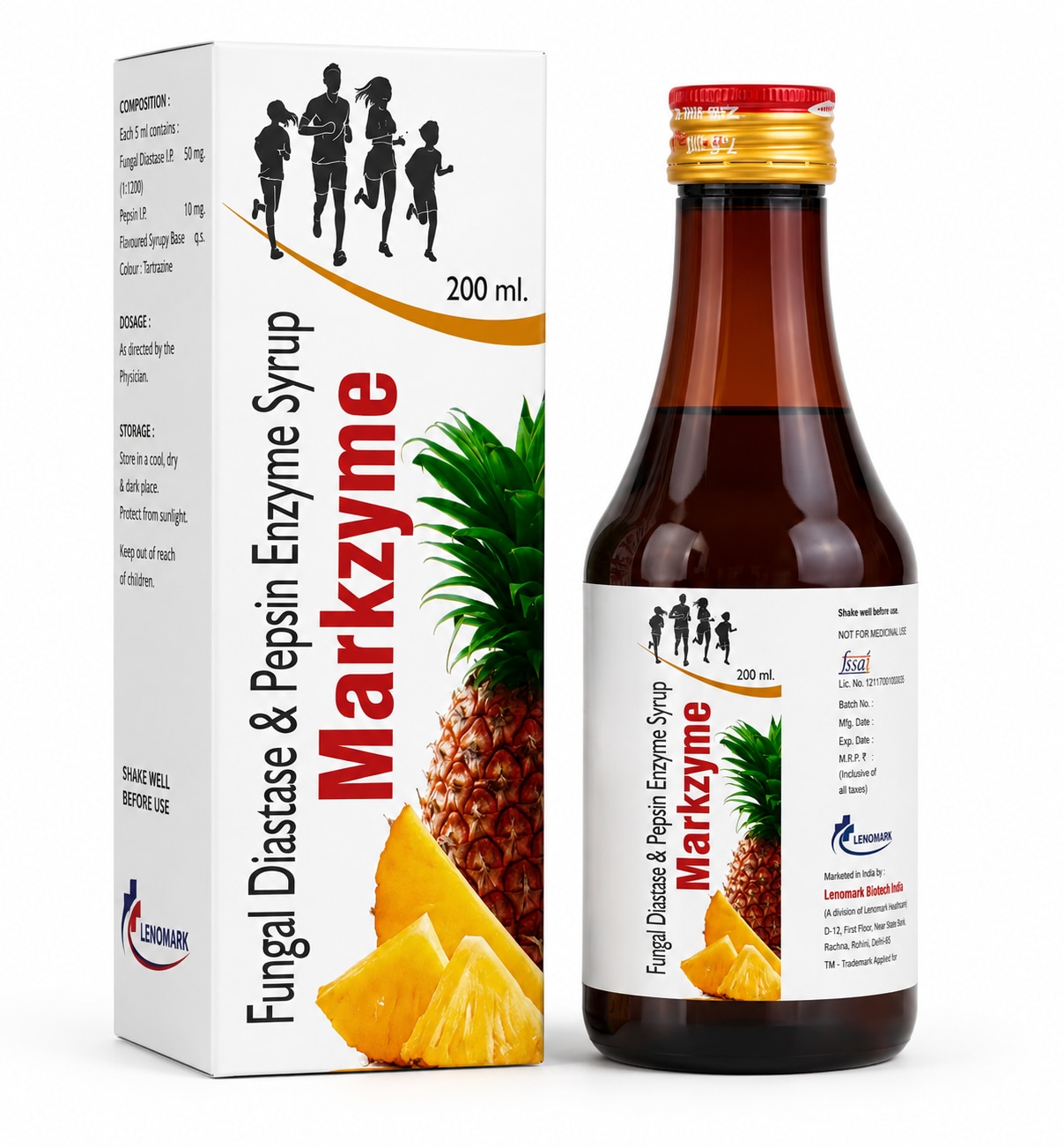 | Syrups Composition Fungle Diastase 50 mg. + Pepsin 10 mg. Syrup Markzyme Syrup is a digestive enzyme formulation specially designed to support healthy... View product → |
Frequently asked questions
How do you verify a Markzyme manufacturer’s Panchkula site?
Match the complete address on the Markzyme label with the Haryana drug-control licence and ONDLS records where available. Ask for a site visit or verifiable evidence that the premises manufacture the syrup rather than serving as an office, warehouse or distributor.
What should you compare between Panchkula syrup manufacturing companies?
Compare the plant’s licence scope, syrup production and filling equipment, quality-system records, testing capabilities, batch documentation, minimum order quantities, lead times, tooling or packaging charges and the full contract price.
How can a manufacturer protect enzyme activity during syrup production?
Ask for documented controls covering enzyme storage, water quality, mixing order, temperature exposure, holding time, filling conditions and in-process activity checks. The manufacturer should explain how its process prevents heat, pH, shear and prolonged storage from reducing activity.
Which raw-material and packaging records should you review for Markzyme syrup?
Request supplier qualification records, certificates of analysis, identity and assay results, microbial limits, allergen or origin information where relevant, approved packaging specifications and compatibility evidence for the bottle, cap, liner and measuring device.
Why do stability records and contract terms matter when choosing a Markzyme supplier?
Stability records show whether the formulation retains appearance, microbial quality, assay and enzyme activity through its claimed shelf life. The contract should define specifications, batch release, deviations, recalls, rejected batches, change control, ownership of records, delivery dates and payment responsibilities.
Keywords